The pros and cons of centralising payments
There’s a moment in every payment journey when centralisation starts sounding irresistible to merchants. One provider, one integration, one reporting layer - and one place to manage payment flows. Sounds so simple in theory…
But it’s like deciding your entire wardrobe should be black because “black goes with everything” and is suitable for every event, every season and every occasion. Clean. Simple. Easy. Until one day you realise you’re the only one wearing black at an event where the dress code specified lavender gingham.
Payments centralisation follows a similar pattern. At first, it solves genuine headaches. Reporting becomes easier. Payment methods become simpler to manage. Routing becomes faster and cleaner. Technical teams stop juggling integrations like circus performers fuelled by coffee and panic.
For years, centralisation felt like the obvious answer to increasing payment complexity. And there’s no doubt that it can make business easier to do in many circumstances. But just as payment environments become more sophisticated, merchants (and their PSPs) are discovering something important: Simplifying your stack and concentrating your risk are not the same thing.
Because centralisation can create a different range of complexities hiding underneath the surface.
And increasingly, merchants and payment providers are discovering that putting everything in one place can create as many problems as it solves. Because it all hinges on which place you’re putting everything into.
The pros: Why centralisation took off
To be fair, centralisation has earned its popularity. For merchants and providers operating across multiple geographies, providers and payment methods, complexity builds quickly. For instance, many merchants might be juggling one PSP in Europe, another in North America, and local acquirers in APAC.
And that means having to integrate and manage different fraud tools, alternative payment methods, different reporting structures, contracts and APIs. Then there’s the added complication of different teams trying to stitch everything together. At enterprise scale, payments can start resembling an overpacked suitcase where somebody sat on the lid and hoped for the best.
Centralisation promised order. Suddenly businesses could:
- Consolidate reporting into one environment
- Simplify payment routing
- Reduce duplicate integrations
- Accelerate payment method deployment
- Improve operational visibility
- Reduce technical overhead
For many merchants, especially at enterprise level, these gains are significant. A global travel provider launching into new territories doesn’t want the hassle of running separate payment systems operating independently in every region. Likewise, an ecommerce marketplace managing dozens of payment partners around the world does not want engineering teams rebuilding payment logic every quarter.
These instances are where centralisation creates consistency. It reduces operational noise, creates efficiency, and importantly, it gives payment teams space to focus on optimisation rather than administration. No surprise, then, that many businesses embraced it enthusiastically - at least initially.
The cons: The centralisation plot twists nobody mentions
The challenge starts when centralisation quietly turns into concentration. Because there is a very important difference between everything managed from one place and everything depending on one thing. That distinction becomes painfully obvious when something breaks. if your entire payment operation runs through one provider, one infrastructure layer or one integration path, you have introduced a potential single point of failure. And the key word here is “potential”, depending on which centralisation provider you select.
Payment failures have an unfortunate habit of becoming visible very quickly. They can range from provider outages, regional disruptions, gateway performance chokeholds, and regulatory changes. No matter what the glitch is, when they do happen, businesses often discover to their detriment just how dependent they have become.
The irony is hard to ignore. Infrastructure introduced to reduce complexity can sometimes create fragility instead.
Then comes another issue - vendor lock-in. Once payment infrastructure becomes deeply embedded inside a business, changing course becomes difficult. Adding new providers slows down. Testing alternatives becomes painful. Commercial negotiations can become harder, and innovation becomes constrained.
Suddenly the business aiming for agility starts moving like a cruise ship trying to perform a three-point turn. That becomes particularly challenging when customer behaviour changes quickly. And we all know that payments rarely stand still for long.
The merchants winning today are building balance
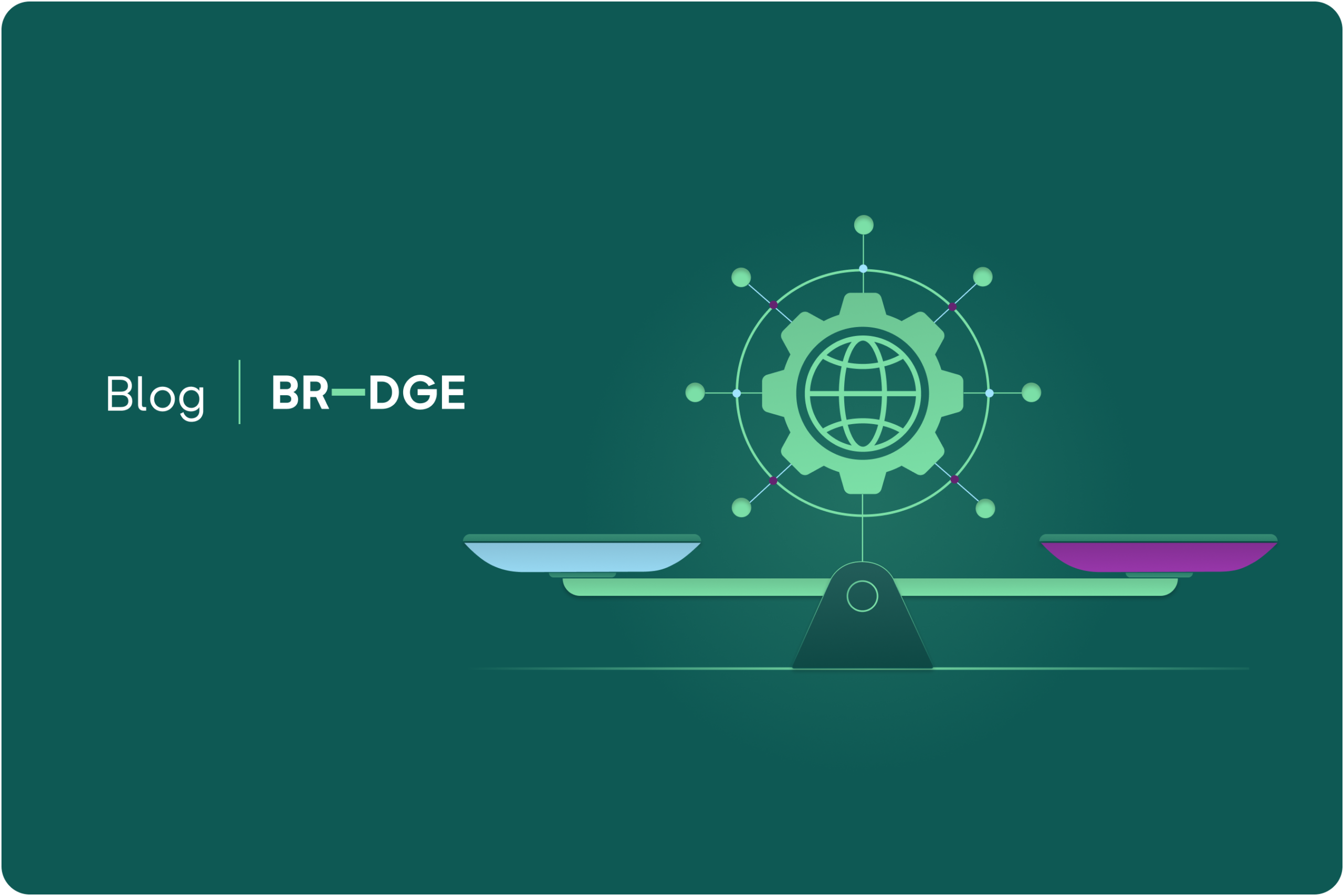
This is where orchestration changes the conversation. Because orchestration introduces something more useful than simple centralisation or even complete consolidation - it introduces balance, and the ability to maintain flexibility while creating control.
Think of orchestration as centralisation with an emergency exit already built into the architecture. Merchants still gain:
- Unified data and reporting
- Simplified integrations
- Smarter routing
- Faster deployment
- Better payment visibility
- Improved customer experiences
But crucially, they avoid becoming trapped inside rigid infrastructure that doesn’t give them room for manoeuvre. And that flexibility matters more than ever today.
Take international expansion. Without orchestration, entering a new market often means long provider discussions, gnarly technical integration projects and significant engineering effort that can cause immense strain on internal resources. With orchestration, businesses can test acquiring relationships, launch local payment methods and optimise performance with far less disruption and in much shorter time-to-market.
The same applies to customer segmentation. Different customers in different markets often need different payment experiences. Merchants used to accepting Visa or Mastercard products will be flummoxed when faced with rising demand from Asia-Pacific customers wanting to use WeChat Pay at checkout. Orchestration gives merchants and PSPs a veritable smorgasbord of global alternative payment methods to offer to their customers. Or to go back to my wardrobe analogy, bespoke tailoring for each customer rather than a one-size-fits-all black boilersuit.
Who watches the orchestrator?
Here’s the slightly uncomfortable question merchants and payment providers increasingly ask: What happens if the orchestration layer itself becomes the bottleneck? Because if orchestration becomes central to payment strategy, resilience matters there too. An orchestration provider should not become another hidden dependency underneath the architecture. And the fact is that while many businesses position themselves as orchestrators, they’re anything but, because they’re still tied to their own dependent relationships, which ultimately restricts choice for their own end customers.
Centralisation sounds sensible until complexity shows up. That’s why independence, interoperability and back-up paths should be vital selection criteria for merchants considering which orchestrator to go for.
As orchestration matures and evolves to operational design questions, increasingly, merchants are asking whether payment traffic can bypass the orchestration layer if necessary. Or whether direct PSP relationships will remain available. Or whether tokenisation can still operate separately.
At BR-DGE, this thinking directly informs how we approach our orchestration infrastructure. Not only are we truly independent and vendor-agnostic, our capabilities support merchants wanting orchestration flexibility while maintaining direct relationships with backup PSPs or gateways underneath. For instance, there’s Vault (a secure, PCI-compliant tokenisation solution that combines token types and services), dynamic routing, and automatic failover. Because flexibility should not disappear simply because infrastructure becomes smarter. Quite the opposite.
The future Is strategic control
It used to be the case that payments decisions were often as simple choices:
- Centralise.
- Decentralise.
- Consolidate.
- Diversify.
With orchestration having proved its worth, the answer now appears to be none of the above. The strongest payment strategies are building balance:
- Enough centralisation for visibility.
- Enough flexibility to avoid concentration risk.
- Enough resilience to withstand disruption.
- Enough interoperability to adapt.
Because centralising payments should not force businesses into rigid choices. It should create options, and freedom to explore different payment pathways. That level of strategic control may ultimately become orchestration’s biggest contribution.
Related content