Why static PSP relationships are failing enterprise merchants
Merchant payments teams consistently pour energy into smooth checkouts and better customer journeys, yet the pipes underneath often stay unchanged. The front-end might feel polished, yet behind it most transactions may still depend on a primary payment service provider (PSP) that no longer fits.
Our research shows that seven in 10 merchants route the majority of their volume through one PSP, and among the largest businesses, half concentrate more than 70% of payments with a single provider. What begins as a convenient integration quietly becomes the backbone of the entire operation. Over time, that dependency can make the whole set-up more exposed: outages hit harder, expansion slows, and performance gains are tougher to achieve.
The hidden cost of staying still
Most teams don’t set out to build a single-provider model. It usually starts with a sensible choice. A PSP offered decent coverage, the integration went in on time, and the business got what it needed. Then the years roll on. The merchant enters new regions, adds more payment options, spins up different brands and channels – but most of the traffic still marches down the same route. That first integration ends up carrying far more weight than anyone planned.
Meanwhile, the job it has to do keeps growing. Latency that once felt fine starts to show its limits at higher volumes. Approval rates level off in markets that really matter. Commercial terms feel harder to move. Product and engineering teams find themselves working around the gateway’s limits instead of building the payment journey they would actually like. None of this looks like a single big failure, but together it slows the business down.
Why teams feel stuck
Plenty of merchants can see these issues in their data but still hesitate to shake things up. On paper, bringing in additional PSPs and routing approaches sounds like extra dashboards, extra contracts, extra tech uplift and broad process change. It is easy to see why people leave things as they are.
The catch is that this caution starts to turn into its own problem. When almost all of the volume goes through one route, changing pricing, trialling a new provider, or even fixing recurring performance issues suddenly feels high-risk. The stack looks stable, but it is hard to move without causing a wobble.
Between rigid and messy
This is where a lot of merchants feel boxed in. Stick with a primary PSP and you keep things simple, but you also accept that a single outage, a change in fees or a stalled roadmap can affect the majority of your operations in one hit. Spread volume across several PSPs without a plan and you risk ending up with scattered data, different rules in different regions, and a lot of manual work to keep everything aligned.
Neither extreme is attractive. One is too rigid to support growth; the other is too tangled to run smoothly day to day.
Diversification as an enabler
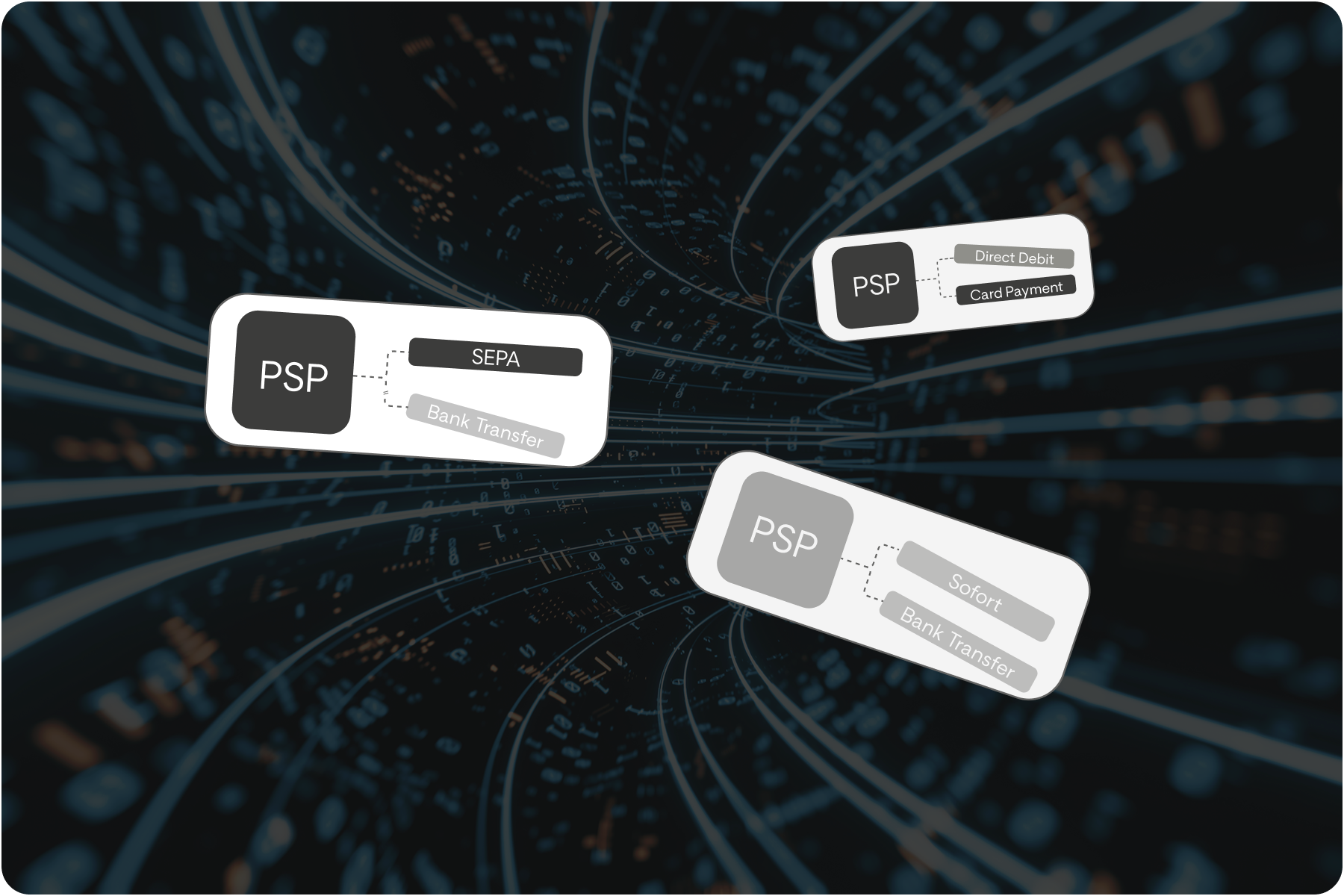
The answer is not ‘more providers for the sake of it’. What helps is the ability to spread volume in a controlled and specifically designed way, with the right automated actions and failovers in place. This reduces risk, while keeping the operation feeling manageable for the teams running it.
When merchants can route traffic more flexibly, the benefits show up quickly. Transactions can be sent to the PSP that tends to get stronger approvals with certain issuers or in specific countries. Latency on cross-border routes can be cut down. New payment methods, wallets or local specialists can be tried without tearing up the integration that already exists. And when a provider knows they are not the only game in town, conversations about commercials become easier.
This only works if the moving parts are joined up. That is where an orchestration layer earns its keep: one connection for the merchant; multiple PSPs, payment methods and pathways behind it; routing and controls managed in one place rather than scattered across teams.
Moving beyond dependency
Provider dependence is a side effect of how payment stacks grew up, not a sign that anyone made a bad call. But as volumes rise and customer expectations sharpen, leaning on one PSP for almost everything becomes harder to defend. It weakens resilience, holds back performance, and leaves value on the table in markets where margins are already tight.
Merchants do not need to rip out their existing provider. They need the option not to be stuck with them. Building in that flexibility - the ability to move volume, add partners and try new ideas without turning the lights off - is what turns payments from a fixed cost into something that can actually support growth.
Explore the power of resilience in depth in BR‑DGE’s Payments Resilience Playbook. It shows how merchants build flexibility, innovation and performance, without disruption. Download the Playbook here.
Related content