Verified player with unverified card: Closing the identity gap at deposit
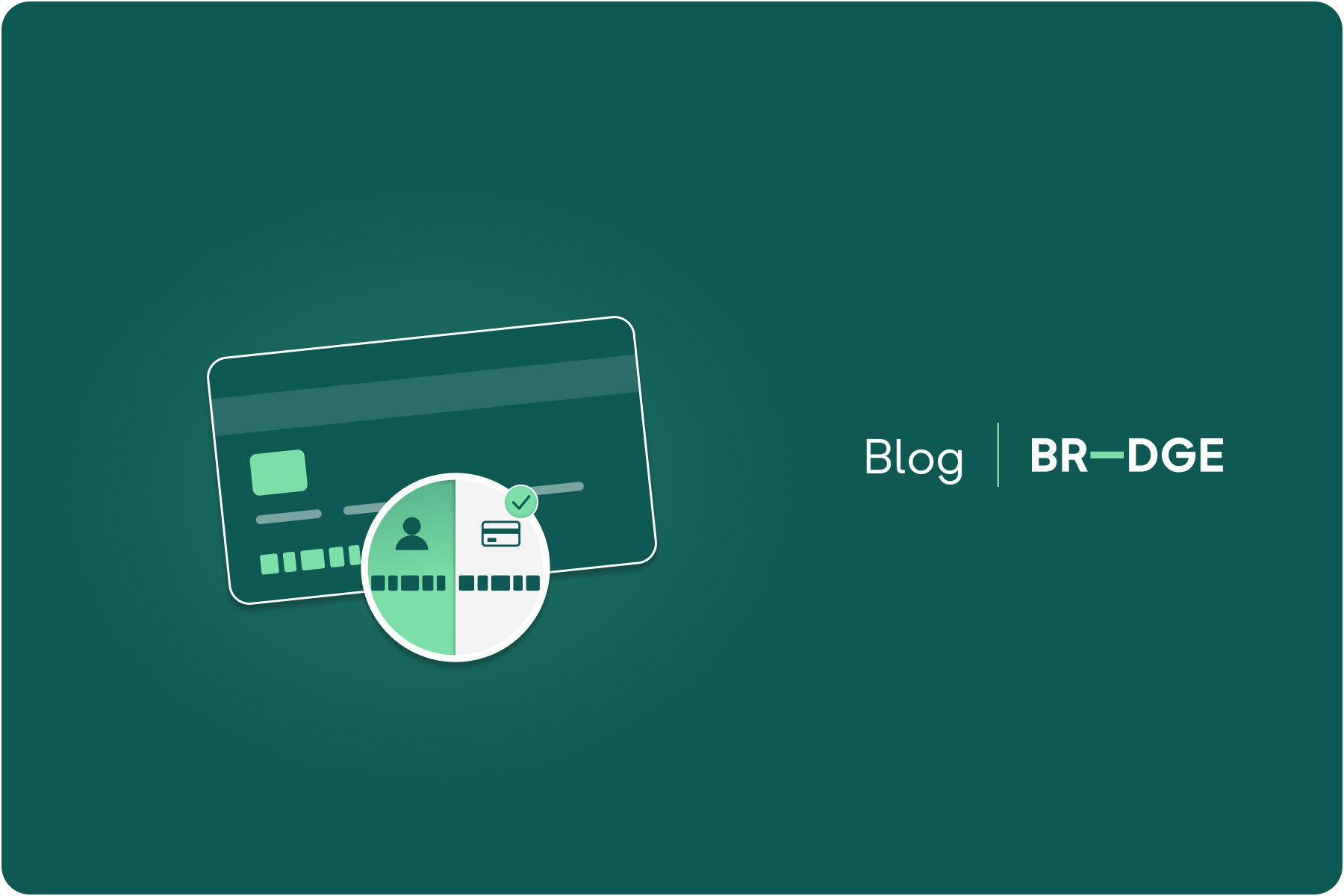
A card check tells you the card is real and has funds. But it tells you very little about who is holding it. Someone with a stolen card number and CVV can pass that check without knowing the name the bank has on file, and the payment will go through like any other.
Regulated iGaming operators put a lot of effort into verifying who opens an account. They check documents and addresses, screen against watchlists and run age checks. Far fewer confirm, at the moment of deposit, that the card being used belongs to the person they've just verified. Stolen cards, borrowed cards and third-party funding can potentially all slip through that gap.
In this blog, we look at what the gap looks like in practice, why regulators are paying closer attention to it, and how BR-DGE Verify helps operators check that the name a cardholder submits matches the account name the issuer holds on file.
One blind spot, three different risks
Take a fraudster who has bought a batch of card numbers and CVVs online. They open an account with stolen personal details, pass KYC, and start depositing. Every card clears the payment check, because none of them has been reported stolen yet and each one is still active and funded. Nothing looks wrong until the real cardholders spot the transactions and the chargebacks start to arrive. By then the money has usually moved on, and the operator is left with the losses, the fees and the admin.
The same gap catches players who aren’t trying to commit fraud at all. Someone who self-excluded might return a month later with a different card. Their account details are genuine and their KYC still checks out, so nothing in onboarding raises a flag. It’s only the card that has changed, and it belongs to their partner.
Underage play exposes the same gap. A teenager can open an account using a parent’s name, date of birth and address. Those details belong to a real adult, so the age and identity checks pass. For deposits, though, the teenager uses their own debit card, which many banks issue to under-18s. The card number, expiry date and security code are all correct, so the payment goes through. As far as the payment system can tell, it’s a normal deposit from a verified adult customer. Only the name on the card account would show that something is wrong.
These are three different risks: fraud, safer gambling and underage play. They share the same blind spot. In each case the payment looks fine, and the problem only shows when you ask one question: Does the name on the card account match the name on the player account?
Regulators are already asking the question
These scenarios mirror real enforcement cases. In the US, a state regulator fined a licensed operator after organised fraud rings built hundreds of accounts on stolen identities and funded them with stolen or fraudulently obtained cards. Some of those rings ran for more than two years. The regulator found that weak identity checks let it happen.
In Canada, a provincial regulator penalised an operator after minors created and funded online gambling accounts, saying plainly that young people must not be able to open accounts, deposit money or gamble online. At the international level, anti-money-laundering bodies now list mismatches between customer and payment information as a risk indicator in gambling. That puts the funding check in the same category as other warning signs operators are expected to monitor.
Currently, the UK has no rule saying a card must be in the customer's name, but the regulator has made clear that it expects operators to enforce their own rules on third-party funding at the point of deposit. Accepting a deposit that may break an operator's own terms and only asking questions when the player tries to withdraw is seen as unfair to customers.
Spain is setting the standard
Spain has now turned that expectation into a legal requirement. Since late October 2026, operators licensed in Spain must verify that the holder of the payment method used for deposits and withdrawals is also the holder of the gaming account. The requirement applies to every payment method a player uses, and it is part of a wider anti-money-laundering reform aimed at protecting players and tightening identity controls in online gambling.
The government has been clear about why. The consumer ministry linked the change to identity theft and impersonation, pointing to a 12% rise in identity-impersonation complaints in online gambling. Players whose details had been used to open accounts without their knowledge, and cardholders whose cards had funded someone else’s gambling, were among the problems the rule was designed to fix. Putting the ownership check into law means operators can no longer treat it as optional or leave it until a withdrawal is requested.
What the rule doesn’t do is say how operators should meet it. It sets the outcome but not the method, and legal advisers in Spain have said the text leaves more questions than answers. Operators are now weighing up the options, from asking players to upload card photos, to building checks with each payment provider. Many are looking for something that proves ownership reliably without adding friction or creating new data-protection risks. Other regulators will be watching how Spain’s approach works in practice, and operators elsewhere would be wise to do the same.
Why the usual checks fall short
Standard payment authentication is designed to answer one question: is this card valid and able to pay? It does that well, and once a card is reported lost or stolen, the issuer will decline it, and fraud screening will usually catch it.
The weak spot is the window before that happens. Card details stolen in a data breach or bought online can still be used for days or weeks before the real cardholder notices, and a card borrowed from a family member may never be reported at all. During that window the card is still valid as far as the payment system is concerned, and authentication has no way of telling whether it belongs to the person using it.
The common workaround is to ask players to upload a photo of their card, sometimes with digits covered, and have a team review it manually. That adds friction at exactly the point where operators want deposits to be smooth, and genuine players often drop off rather than go through it. It also means collecting and storing images of payment cards, which brings its own data-protection and PCI risks. Manual review is slow and inconsistent, and it doesn't scale as volumes grow.
A simpler approach fits the gap better. The card issuer already knows who the account holder is, so instead of asking the player to prove the card is theirs, you can ask the issuer.
How BR-DGE Verify helps
BR-DGE Verify asks the card issuer whether the name you hold for a player matches the name on their card account. When a player adds a card, your system sends BR-DGE the card token you already hold, along with the player's first and last name. BR-DGE passes that request to the card network, the issuer compares the name with its records, and the result comes back in real time – match, partial match or no match.
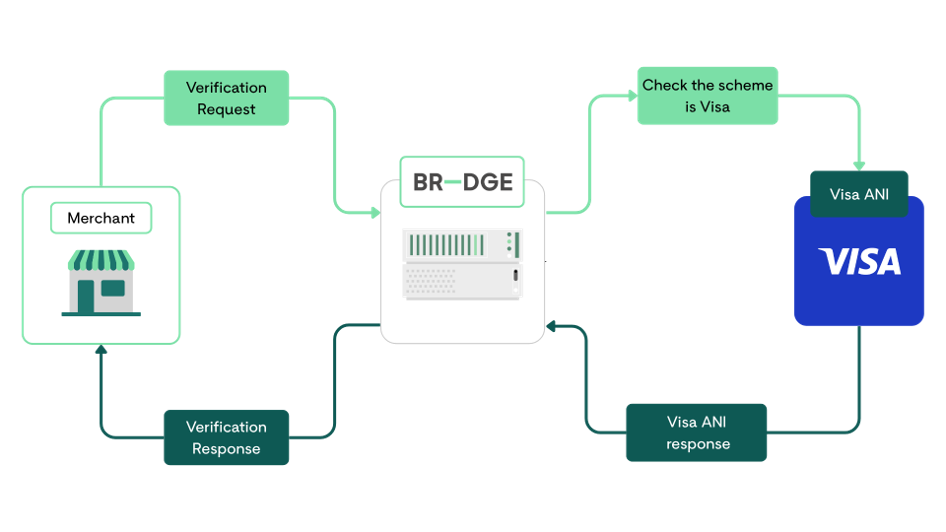
Verify doesn't need to be tied to a payment, so you can place it wherever it makes sense in your flow, and you decide what each result means for your business.
You might block a deposit, flag the account for review, or let it through with a warning, depending on your risk appetite and the market you're operating in. Because it runs through a single managed connection and uses the card tokens you already hold, you don't need to build and maintain separate integrations yourself.
What changes for operators
Now, when we take the fraudster with the batch of stolen cards, they have the card numbers and security codes, but they rarely have the exact name the bank holds for each account.
With Verify in place, those cards come back as No Match when they're added, before the first deposit is made. The fraud is caught at the door instead of turning up weeks later as a stream of chargebacks, fees and write-offs.
The self-excluded player trying their partner's card hits the same check. Because the card is held in someone else's name, it gets flagged as soon as it's added to the account, and the operator can step in before any money is gambled.
The same applies to the teenager who opened an account in a parent’s name. When they add their own debit card, the name on the card account doesn’t match the name on the gambling account, so Verify flags it at the first deposit rather than months later during an investigation or a complaint. For operators, that's a clear, recorded control that supports safer gambling and age-verification obligations.
Genuine players get a better experience too. Most won't notice the check at all, and nobody has to photograph their card or wait for a manual review. Partial Match gives operators room to handle edge cases sensibly.
A player who has recently changed their name, or whose bank holds a slightly different version of it, can be routed to a lighter extra step rather than turned away. That decision logic stays with the operator.
Compliance and support teams benefit as well. Every check produces a clear, consistent result, which cuts the time spent on manual reviews and post-transaction investigations. Over time, those results build a record of card ownership across the player base.
Operators can use it to re-check cards periodically, review accounts with repeated partial matches, and clean up historic data before a regulator asks to see it.
In short, Verify gives operators one reliable way to confirm whose card is behind a deposit, before any money changes hands. This helps reduce fraud and chargebacks, introduce stronger, safer gambling and age controls, and provide a smoother experience for genuine players, who don’t need to upload card photos. It also gives compliance teams a clear record of every check, which helps operators stay ahead of tightening regulation in Spain and beyond.
Don't wait for the deadline
Spain has already set its deadline, and the direction of travel elsewhere suggests other markets may follow. Operators that start now have time to test their thresholds, tune how they handle partial matches, and check the cards already stored on file on their own schedule, without a regulator setting the timetable for them.
If you want to know whose card is behind every deposit, talk to the BR-DGE team. We can walk you through how Verify fits into your onboarding and deposit flow and what it would take to get it running.
Related content