Tokenization & Compliance: How to Mitigate Risks in Retail Payments
Making payment processes simpler for customers has created more challenges for retailers. Jacob Spencer, Chief Revenue Officer at BR-DGE, explains that having too much payment data can complicate compliance. This complexity can also slow down a retailer’s ability to respond to new market demands. Retailers need to find a balance between offering choices and protecting sensitive information to improve their operations and increase customer satisfaction.
Retailers have spent years making payments feel simpler for customers. Behind the scenes, many have made it harder for themselves.
Wallets, saved cards, loyalty links, local payment methods, smoother refunds, and more providers have all improved the buying journey. More payment choices are a good thing: they give retailers more ways to improve acceptance, support local preferences, and make checkout work better for customers. But it has also left many retailers carrying payment data across more systems than they need to.
Some of that data is valuable. Retailers do need to understand failed transactions, refunds, chargebacks, provider reliability, routing performance, and where customers drop out. The problem is the amount of sensitive payment data they still hold directly or allow to sit across different provider setups.
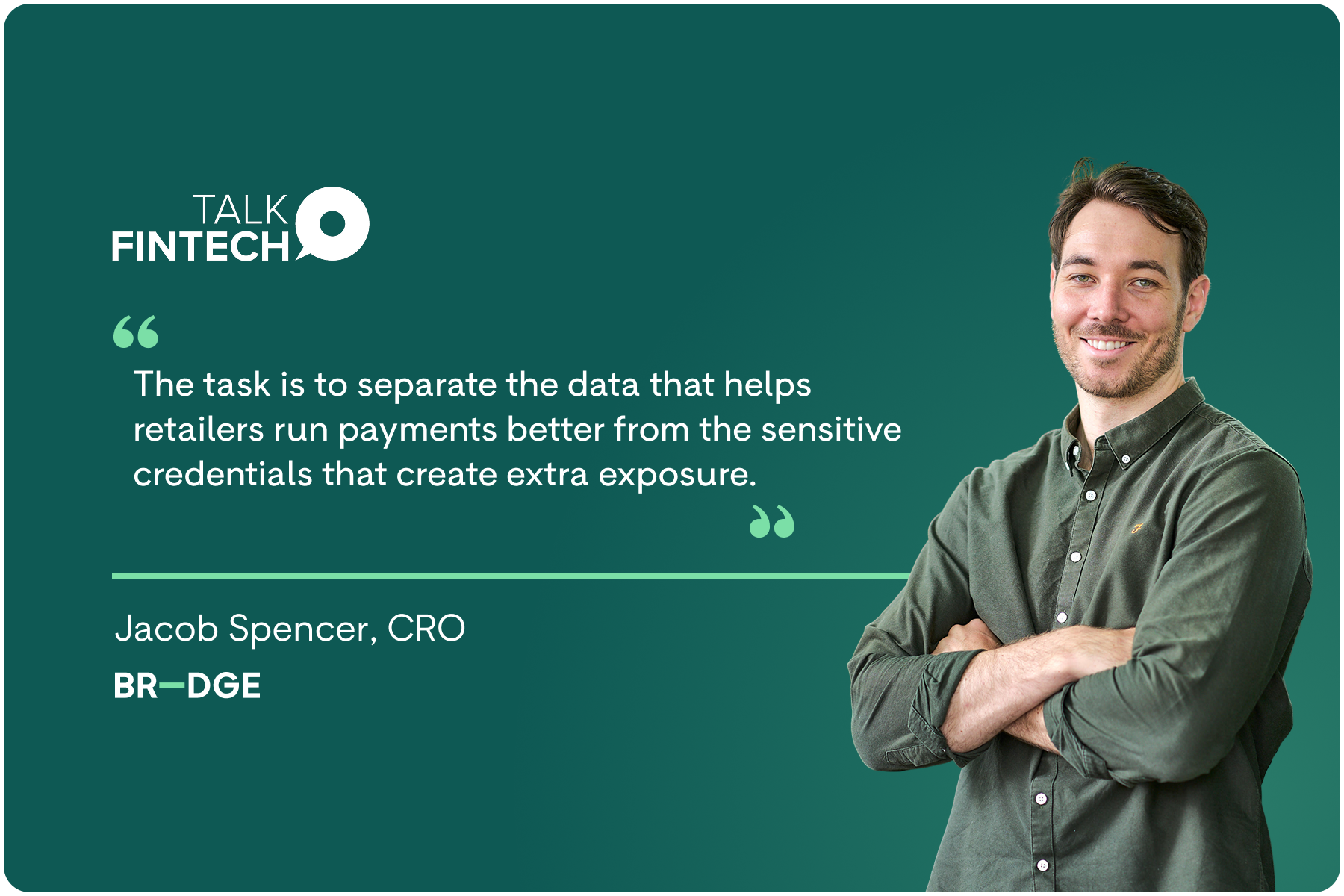
As payment estates grow, the hard part is bringing more choice into the payment flow without letting sensitive data spread across every new connection. The next task is to separate the data that helps retailers run payments better from the sensitive credentials that create extra exposure, extra compliance work, and extra limits on future provider choice.
When Payment Data Pulls More Systems Into Scope
That compliance work usually starts with the PCI scope. The Payment Card Industry Data Security Standard (PCI DSS), gives the card payments industry a framework for protecting cardholder data. In simple terms, if a system stores, processes, or transmits payment account data, it may fall into scope. The more systems involved, the more there is to document, secure, monitor, and assess.
Once the audit is done, the business still has to manage the payment setup. Raw card data has to be traced, access has to be controlled, and any new provider, payment method, or customer journey can change which systems need to be assessed.
Retail makes this especially difficult because payments sit inside so many operational processes. An online order, an in-store return, a saved card, a loyalty account, a fraud check, or a refund can all depend on payment data being available in the right place.
A retailer can tick the compliance box and still have a payment setup that is slow to change. If every new provider, market, or checkout journey adds more systems to assess and more data flows to manage, the business is carrying payment data work that it could reduce.
How Payment Data Spreads
Retail payment setups usually grow as different teams solve different problems. A regional team may add a local provider to improve approval rates, while wallets, loyalty, fraud checks, refunds, and customer service gradually build their own processes around the payment information they need.
That can work well enough until the business tries to make a change. A new provider, checkout update, refunds project, or routing change can quickly touch stored credentials, token handling, or transaction records held somewhere else in the setup, leaving technology and compliance teams to trace data across systems and partners before payment teams can make the change they wanted.
Over time, payment teams have less room to move. A new payment method may reopen questions about where card credentials sit, while a provider switch or payment service provider (PSP) outage becomes harder to manage if the credentials needed for the transaction are held in one provider’s vault.
Tokens Have to Work Beyond the First Provider
Tokenization is often treated as a security fix, but the way it is set up can influence payment flexibility for years. At its simplest, tokenization replaces raw card details with a substitute reference, so the retailer’s own systems do not need to hold the Primary Account Number (PAN), the long card number associated with the payment card.
That helps reduce PCI scope and lowers the impact of a breach, because fewer internal systems hold sensitive card data. It can also make day-to-day operations easier, with fewer systems treated as places that directly handle cardholder data.
The problem comes when those tokens are tied too closely to one PSP. A PSP-native model can seem simple enough: the provider stores sensitive credentials and issues tokens to the retailer for future transactions. That can work for a simple setup with one provider, one market, and one checkout flow. Larger retailers often need more room to move.
For larger retailers, the issue tends to appear late in the project. The backup PSP is ready, the local acquirer is in place, or the checkout change has already been built, and then the team hits the stored-card problem. The token still belongs to the original provider. Before the new route can be used properly, someone has to map tokens, re-tokenize cards, or ask customers to enter details again.
Network tokens can help reduce that dependency because they are issued through card networks, rather than sitting only inside one provider’s vault. Visa has reported a 4.6% global lift in authorization rates for tokenized card-not-present transactions compared with PAN-based transactions.
Network tokens can also be refreshed when a card expires, is replaced, or is reissued. Account updater services perform a similar role for stored-card payments by helping merchants keep card details current after a card changes, without asking the customer to update them manually.
Vaulting and Orchestration Keep Options Open
Stored cards can become a problem very quickly. If the tokens and credentials sit in one PSP’s vault, the merchant can only use those tokens to route through that PSP, creating silos that don’t allow for flexible routing or the ability to adapt payment flows easily. An independent token vault gives the retailer more room to use the same credentials across PSPs, gateways, and acquirers.
This tends to come up at the worst possible time: when the business wants to move quickly. The new PSP route looks better, or the wallet is ready to add, and then someone has to ask where the stored credentials actually sit. If the answer is ‘inside the old provider’s vault’, the job gets slower, more complicated, and more expensive than anyone expected.
Orchestration platforms that offer their own independent vault can help those choices work in live traffic. They connect checkout, the vault, and the provider network, then apply the routing, retry, and failover logic around them. It also gives payment teams a cleaner way to bring new providers, acquiring connections and payment methods into the business, instead of treating every addition as a separate build.
Key Takeaways
Retailers need payment data to run the business properly. Approval rates, failed transactions, routing results, refund patterns, and provider performance all show where payments are working and where they need attention. Sensitive card data is different, and there’s no reason for it to be part of the dataset a merchant retains.
Tokenization, vaulting, and orchestration make payment flexibility possible. Stored credentials should not be the reason a new provider, wallet, refunds process, or routing change gets stuck.
The useful data still needs to move through the business. Sensitive card data deserves a much shorter journey. Keep it out of everyday systems where it adds risk, slows change, and ties future payment decisions to old provider choices.
This article originally appeared on Talk Fintech. Read the full piece to explore how independent tokenization gives retailers ultimate payment flexibility.
Related content